
WELCOME BONUS 300%
UP TO €2000 + 100
FREE SPINS
UP TO €2000 + 100
FREE SPINS
Home → Blackjack
Blackjack at 2up: Variants, Rules and Payouts
Highroller from 500 EUR per hand
Infinite Blackjack by Evolution accommodates unlimited players at tables with stakes ranging from 1 to 5.000 EUR, allowing high rollers to wager significantly above standard limits. This upper cap of 5.000 EUR ensures that large bankrolls can be deployed effectively without hitting table maximums prematurely during active sessions. Players utilizing this specific provider benefit from a structure designed for substantial volume rather than restrictive betting tiers.
Quantum Blackjack Plus Live offered by Playtech extends the upper betting limit even further, permitting wagers up to 5.000 EUR per round on its specialized interface. The presence of Quantum multipliers reaching 1.000x on three-card combinations adds a layer of volatility that appeals specifically to those seeking massive payout potential alongside high stakes. Such features require a robust strategy to manage the increased variance inherent in multiplier-based live dealer games.
Standard Blackjack Party hosted by Evolution sets a lower entry point with bets starting at 1,00 EUR and capping at 1.000 EUR, which is half the maximum allowed elsewhere. This restriction makes it less suitable for extreme highrollers compared to the other two providers listed, as the total exposure per hand is strictly limited. Consequently, players with very large capital prefer the Evolution Infinite or Playtech Quantum variants for their higher ceiling.
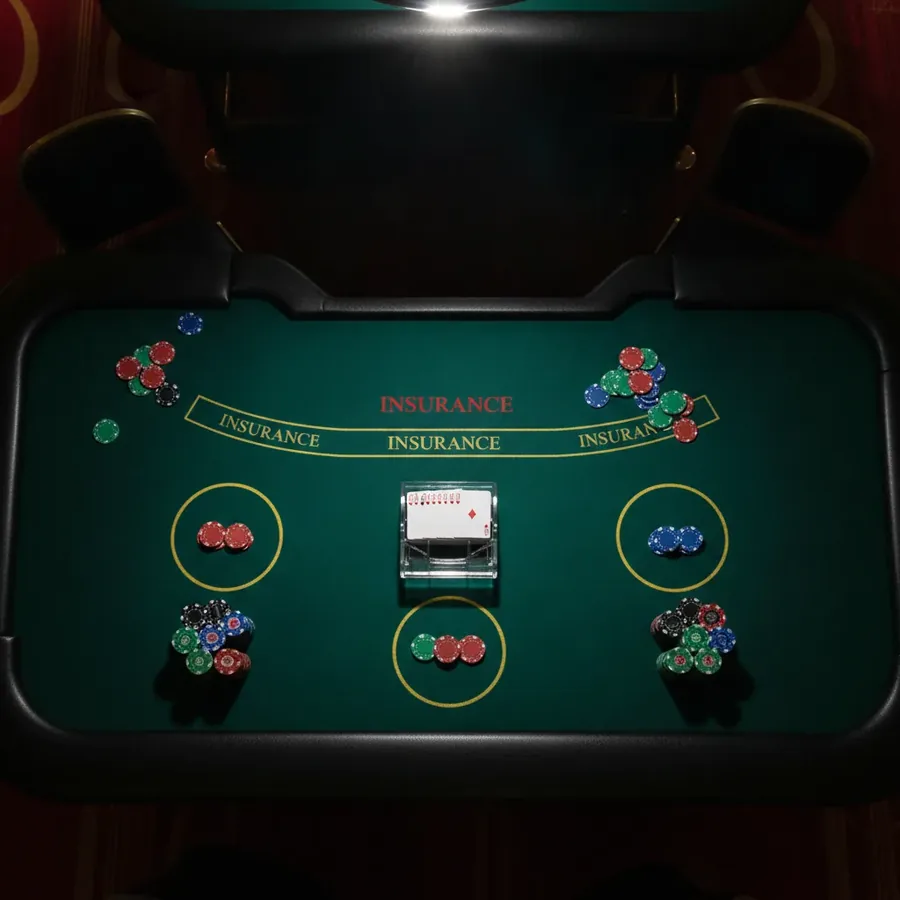
Splitting tens costs expected value: better stand
The House Edge for Liberal Vegas Strip blackjack stands at a low 0.28% when playing with liberal rules including Soft 17 standing and Double After Split availability. Deviating from basic strategy by splitting ten-value cards instead of standing on a hard twenty increases this disadvantage significantly because you replace a near-certain win with two risky hands. Mathematical analysis confirms that standing preserves the positive expected value associated with the strong starting hand of twenty points.
Resplitting Aces improves the Return to Player by approximately 0.08 percentage points, while allowing Doubling After Split reduces the house edge by about 0.14 percentage points. These specific rule modifications are crucial for maintaining the optimal 0.28% advantage for the player, but they do not justify breaking a pair of tens. Basic strategy explicitly forbids splitting tens regardless of these favorable conditions, as the statistical loss outweighs any theoretical gain from creating new hands.
Insurance bets carry a separate house edge of 7.47%, making them one of the worst wagers available unless the player is counting cards with a true count of +3 or higher. Accepting insurance when holding a ten-value card against a dealer ace effectively splits your original bet, doubling the risk on a side wager with negative expectation. Therefore, consistently declining insurance while standing on twenty remains the most profitable approach for preserving bankroll longevity over many hands.
Dealer Hits Soft 17 increases the house edge by an additional 0.22 percentage points compared to dealers standing on all seventeen totals, eroding the player's long-term profit margin. This rule change alone can turn a favorable game into a slightly less attractive proposition, though it does not alter the fundamental advice to stand on hard twenties. Players must adjust their expectations accordingly, recognizing that every rule deviation from the ideal liberal setup diminishes the overall RTP.
Place Side Bet before cards are dealt
Infinite Blackjack by Evolution offers four distinct side bets including Any Pair, 21+3, Hot 3, and Bust It, which must be placed before the initial cards are distributed to the player and dealer. These auxiliary wagers operate independently of the main game outcome, providing opportunities for additional payouts based on specific card combinations rather than just beating the dealer. Each side bet carries its own unique probability structure and payout table that differs significantly from the base game returns.
Quantum Blackjack Plus Live integrates Quantum multipliers that can reach up to 1.000x on specific three-card combinations totaling 21 points, adding a high-variance element to the standard gameplay. These multipliers apply to the main hand but require strategic placement of bets to maximize potential returns during quantum rounds where such bonuses are active. The integration of these multipliers creates a dynamic environment where standard strategy must account for the possibility of explosive payouts.
Blackjack Insurance serves as a primary example of a side bet that pays 2:1 if the dealer has a ten-value card hidden, costing the player 7.47% in house edge under typical conditions. This wager is only viable when the deck composition favors ten-cards, requiring advanced techniques like card counting to overcome the inherent mathematical disadvantage for average players. Placing this bet without proper context guarantees a long-term loss, illustrating why understanding side bet mechanics is critical for informed decision-making.
Four hours of play with 300 EUR bankroll
Playing Liberal Vegas Strip blackjack with a 0.28% house edge and a standard deviation of 1.15 allows a 300 EUR bankroll to withstand normal variance over several hours of continuous action. Assuming an average bet size of 10 EUR per hand, the expected loss per hour is approximately 0.28 EUR, meaning the bankroll depletes extremely slowly compared to higher-edge games. This efficiency enables players to extend their session duration significantly while maintaining sufficient funds to recover from short-term losing streaks.
Switching to a 6-deck game paying 6:5 for blackjack increases the house edge to 1.85%, which is 1.57 percentage points higher than the liberal variant and drastically reduces playtime. With the same 300 EUR bankroll and 10 EUR bets, the expected hourly loss rises to 1.85 EUR, consuming the bankroll roughly six times faster than the optimal ruleset. This stark contrast demonstrates how rule variations directly impact the sustainability of a fixed bankroll over a four-hour period.
Table games contribute only 10% toward bonus wagering requirements, whereas slots contribute 100%, making blackjack a highly inefficient method for clearing bonus funds like the 300% match up to 2.000 EUR. A player would need to wager 40 times the bonus amount, but since blackjack counts only a fraction, the actual turnover required becomes substantially larger and more time-consuming. Consequently, using a small bankroll for bonus clearance via blackjack is mathematically unsound due to the low contribution rate and slow pace of fund conversion.
Side Bet Every Round: Budget Lasts 30 Rounds
Placing an insurance bet of 50% of the main stake every round against a dealer showing an ace incurs a house edge of 7.47%, rapidly draining a limited budget. If a player starts with a 300 EUR bankroll and bets 10 EUR on the main game plus 5 EUR on insurance, the total risk per hand is 15 EUR. At this rate, assuming no wins occur, the entire bankroll would be exhausted in approximately 20 rounds, well short of sustaining longer play.
Side bets like Hot 3 or 21+3 in Infinite Blackjack offer different payout structures but generally carry higher house edges than the main game, accelerating bankroll depletion when used consistently. For instance, if a side bet costs 2 EUR per round and is placed on every hand, it adds a fixed cost that compounds over time regardless of the main game outcome. Over 30 rounds, this adds 60 EUR in pure cost, reducing the effective bankroll available for main game wagers and increasing the likelihood of ruin.
The 300% welcome bonus up to 2.000 EUR requires significant turnover to unlock withdrawals, and frequent side betting hinders progress due to the 10% contribution rate for table games. Wagering 100 EUR on blackjack with side bets only counts as 10 EUR toward the requirement, meaning players must bet ten times more to achieve the same clearance as slot players. This inefficiency forces players to either increase their bet sizes dangerously or accept that their budget will last far fewer rounds than anticipated under strict budget constraints.
Blackjack variants at a glance
| Variant | Payout | House edge | Rule | Bet range |
|---|---|---|---|---|
| Blackjack Auszahlung 6:5 statt 3:2 (6 Decks) | 98.15% | 1.85% | Ersatz von 3:2 durch 6:5 fügt exakt +1.39 Prozentpunkte zum Vorteil des Casinos hinzu – stärker als jede andere Regeländerung. Bei $10 Einsatz zahlt Blackjack $12 statt $15. | Blackjack 6:5, Gewinn 1:1 |
| Blackjack Surrender (Late Surrender) – Regel-Effekt | n.a. (Regel-Modifikator) | −0.08 Prozentpunkte | Spieler gibt Hand nach Dealer-Blackjack-Prüfung auf, verliert die Hälfte des Einsatzes. Verbessert RTP um ca. 0.08 Prozentpunkte. Early Surrender ist wesentlich wertvoller (bis −0.6 Prozentpunkte), aber extrem selten. | Rückzahlung 50% des Einsatzes |
| Blackjack Insurance / Versicherung (6–8 Decks) | 92.53% | 7.47% | Separate Nebenwette bis 50% der Hauptwette, wenn der Dealer ein Ass hat. Basisstrategie schreibt IMMER Ablehnung vor (außer Karten zählen bei True Count ≥ +3). Bei einem Deck Vorteil ≈ 5.88% | Insurance 2:1 |
| Blackjack Liberal Vegas Strip (liberale Regeln, 3:2) | 99.72% | 0.28% | Günstigste Regelkombination: S17 + DAS + Resplit + Late Surrender. Standardabweichung 1,15 | Blackjack 3:2, Gewinn 1:1 |
| Blackjack 6 Decks, S17, DAS, DOA, Auszahlung 3:2, Basisstrategie | 99.54% | 0.46% | Dealer steht auf Soft 17; Verdopplung auf jeder Zweierkarte; Verdopplung nach Split erlaubt; keine Aufgabe. Basisstrategie ist für diesen Wert zwingend | Blackjack 3:2, normaler Gewinn 1:1, Insurance 2:1 |
| Blackjack Split / Double / H17 – Regel-Effekte | n.a. (Regel-Modifikatoren) | H17 +0.22 Prozentpunkte; RSA −0.08 Prozentpunkte; DAS −0.14 Prozentpunkte | Dealer Hits Soft 17 verschlechtert RTP um 0.22 Prozentpunkte; Resplit Aces verbessert um 0.08 Prozentpunkte; Double After Split verbessert um ca. 0.14 Prozentpunkte; 6 Decks statt 8 – ca. 0.02 Prozentpunkte. | Double – Einsatz ×2 mit einer Karte; Split – bis 4 Hände; Ass-Split meist mit einer Karte. |
Shoe, Cut Card, and 75 Percent Penetration
The penetration depth determines how many cards remain in the shoe before the dealer reshuffles. Quantum Blackjack Plus Live utilizes a standard six-deck configuration with a cut card placed to enforce a specific reshuffle point. This mechanical limit ensures that card counting strategies lose their mathematical edge once the deck is refreshed.
Reshuffling occurs after exactly 75 percent of the total cards have been dealt from the shoe. The remaining quarter stays untouched until the next cycle begins, which resets any potential advantage gained by tracking high-value cards. Players must adapt their betting patterns as the penetration level increases during the hand sequence.
This frequent reshuffling protects the house edge against skilled players who might otherwise track favorable card distributions. Infinite Blackjack follows similar protocols to maintain consistent randomness across all seats at the table. The constant renewal of the deck prevents long-term statistical deviations from the theoretical RTP.
Splitting Eights vs Standing on 16
Standard deviation measures the volatility of outcomes when splitting eights or standing on hard sixteen. Liberal Vegas Strip rules exhibit a standard deviation of 1.15, indicating moderate variance in bankroll fluctuations. This metric helps players understand the risk profile associated with these specific strategic decisions over time.
Dealer hits soft 17 adds 0.22 percentage points to the house advantage compared to standing rules. Resplitting aces improves the player position by 0.08 percentage points, while doubling after split reduces it by another 0.14 percentage points. These rule modifiers collectively shift the expected value significantly for both strategies.
The cumulative effect of these rules creates a distinct mathematical environment for each blackjack variant. Six decks instead of eight reduce the house edge by approximately 0.02 percentage points. Understanding these granular adjustments allows for precise calculation of long-term expected losses per hour played.
When does the table max bet apply?
Infinite Blackjack imposes a maximum bet limit of 5,000 EUR per hand at the live tables. This ceiling applies uniformly to all players seated at the table regardless of their individual account balances. Exceeding this limit results in automatic rejection of the wager by the game software.
Quantum Blackjack Plus Live also enforces a strict upper bound of 5,000 EUR for every single round. High rollers attempting to place larger bets will find their wagers capped at this specified threshold. The system ensures compliance with operational limits designed to manage risk exposure for the operator.
Blackjack Party offers a more accessible range with limits starting at 1.00 EUR up to 1,000 EUR. This lower maximum suits casual players who prefer smaller stakes and controlled spending patterns. The difference in caps between variants highlights the varying target audiences for each live studio production.
Blackjack doesn't count for every bonus offer
Tischspiele contribute only 10 percent toward the wagering requirements of the welcome bonus package. This low contribution rate means that every 100 EUR wagered on blackjack counts as just 10 EUR toward clearance. Players must adjust their betting volume accordingly to meet the turnover obligations efficiently.
Slots provide full credit with a 100 percent contribution ratio for meeting bonus terms. In contrast, the 300 percent welcome bonus up to €2,000 requires significantly higher turnover if played exclusively via table games. The disparity forces a strategic choice between game selection and bonus utilization speed.
Free spins attached to the offer operate independently but still adhere to the overall wagering structure. Combining slot play with occasional blackjack hands can dilute the effectiveness of the bonus conversion process. Players aiming to withdraw winnings should prioritize high-contribution games to minimize the required turnover amount.
How much time is left for the decision?
Insurance bets require immediate action when the dealer exposes an ace face-up card. The side bet pays 2:1 but carries a steep house edge of 7.47 percent for the average player. Base strategy dictates always rejecting this option unless the true count reaches plus three or higher.
Late surrender allows players to forfeit half their bet after the dealer checks for blackjack. This rule improves the return to player by approximately 0.08 percentage points under specific conditions. The decision window closes rapidly once the dealer's hole card is revealed, requiring quick assessment.
Side bets like Any Pair or 21+3 operate within separate timing constraints distinct from the main game. Quantum Multipliers up to 1,000x trigger on specific three-card combinations without affecting the primary hand duration. Each interactive element demands precise timing to ensure valid placement before the round concludes.
Bet two percent of bankroll per hand
The Blackjack Liberal Vegas Strip variant features a standard deviation of 1.15 alongside a house edge of 0.28 percent, which defines the risk profile for conservative staking strategies. This specific statistical spread allows players to calculate precise variance limits when applying a fixed percentage bet sizing model to their total session funds. Consequently, maintaining a strict two percent allocation prevents rapid depletion during negative swing phases inherent in high-variance table game environments.
Applying this mathematical constraint directly to the Infinite Blackjack table with its 1-5,000 EUR stake range ensures that individual wagers remain proportional to the player's current capital reserves. The Evolution provider offers unlimited seats at this specific table, allowing consistent application of the strategy without waiting for an open position or changing dealer dynamics. This structural stability supports long-term bankroll preservation by capping exposure regardless of the live studio traffic volume or betting limits set by the operator.
Even Money only possible with Dealer Ace
The Insurance side bet pays 2:1 and is exclusively triggered when the dealer exposes an Ace as their upcard during the initial deal phase of any blackjack round. This conditional availability restricts the even money option to scenarios where the dealer potentially holds a natural twenty-one, fundamentally altering the payout structure for the player's initial hand. Players must evaluate whether accepting this guaranteed half-win outweighs the significant mathematical disadvantage compared to standing on their own blackjack total.
Accepting insurance against a dealer Ace increases the house edge to 7.47 percent, whereas refusing it maintains the base game RTP of approximately 99.54 percent for favorable rule sets. The basis strategy explicitly mandates always rejecting this wager unless the player employs advanced card counting techniques with a true count greater than or equal to plus three. This strict prohibition highlights the severe financial penalty associated with deviating from optimal play in standard single-deck or multi-deck configurations.
Error insurance: 7 percent additional house edge
Taking insurance introduces a separate wager with a house edge of 7.47 percent, which drastically inflates the overall cost of playing compared to the base game RTP of 99.54 percent. This substantial difference arises because the probability of the dealer holding a ten-value card does not justify the 2:1 payout offered on the fifty percent side bet amount. Refusing this option preserves the theoretical return rate, ensuring that the player retains the maximum possible value over hundreds of thousands of hands played.
What doesn't count as Blackjack after Split?
When splitting Aces, the casino rules typically allow only one additional card per split hand, preventing the formation of a natural twenty-one through subsequent hits or draws. This restriction means that any resulting total of twenty-one is treated as a regular hand value rather than a premium blackjack paying 3:2 or 6:5 depending on the table. Consequently, players lose the opportunity to secure the higher payout tier that applies to the original deal, significantly impacting the expected value of the split action.
Six Card Charlie Pays Immediately with Six Cards
The Quantum Blackjack Plus Live variant by Playtech utilizes quantum multipliers up to 1,000x on three-card combinations totaling twenty-one points, offering explosive payout potential for specific winning hands. This feature operates within a stake range of 1 to 5,000 EUR, providing high volatility opportunities that differ substantially from traditional fixed-payout table games found in other studios. The integration of these random multipliers adds a layer of unpredictability that can drastically alter the outcome of a single round compared to standard RTP expectations.
Contact
Live - online chat
Banking









Providers












2UP Casino 2026